
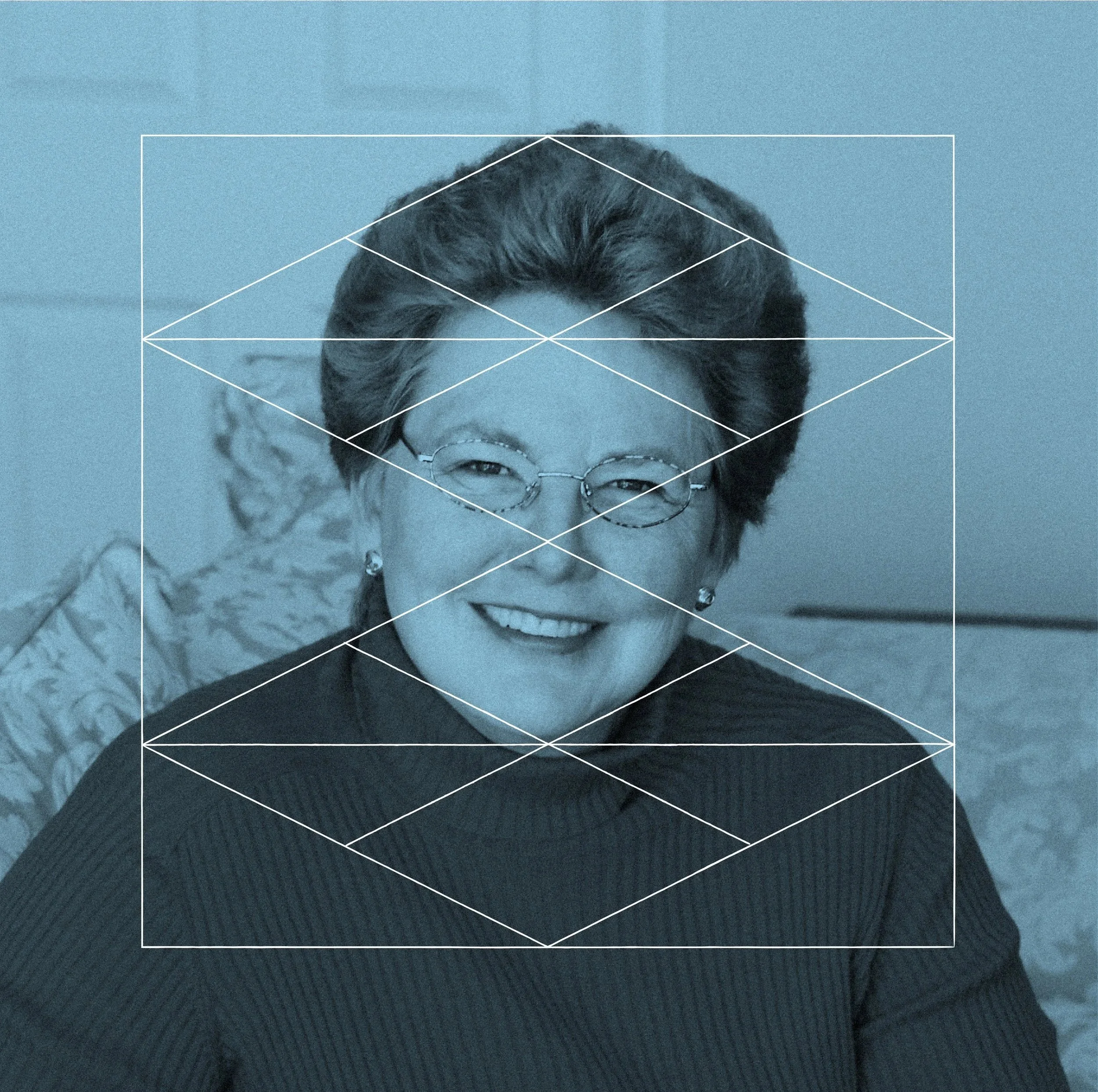
n. kATHERINE HAYLES
GODMOTHER OF THE EMBODIED MIND
THE WORK
When N. Katherine Hayles began her higher education, her focus had been on chemistry. However, she eventually shifted her focus to pursue a PHD in Literature, and her curiosity about the interconnection between the two fields led to her asking some very important questions:
Just how connected are we - the humans, the cognitive thinkers, the ‘natural’ - to the artificial world we have created? Can we really claim superiority in regard to cognition? And how can literature help answer these questions?
These days, Haynes, who currently holds the position of Distinguished Research Professor at UCLA, continues to focus on the connections between science, technology and literature, seeking those answers.
WHY SHE’S A GODMOTHER
Hayles challenges the notion that our humanity exists entirely separately from the synthetic and artificial, the computational. She writes about the history and philosophy underneath the AI moment, and her posthumanist approach asserts that the boundaries between the natural and the artificial are far more blurred than humanity might like to believe.
She is not afraid to vocalise ideas that some might call radical, and has spent her career asking what happens to human identity, consciousness, and agency once cybernetics, AI, and distributed cognition enter the picture, questions Godmothers seeks to explore.
Because she knows that the more we seek to understand this interconnectivity between the natural and the artificial, the more ethically and considerately we can use it.
In How We Became Posthuman (1999), she traces how information came to be treated as separate from the body it runs on, and argues for a view of the human that stays grounded in embodiment even as machines and minds become harder to tell apart.
Writers, critical thinkers, philosophers make up our Godmothers canon as well as scientists, activists, artists, policy makers and technologists. We need collective thinking to move forward consciously and ethically.
NOTABLE WORKS:
How We Became Posthuman (1999): Traces how information technology replaced bodily presence with digital data.
Writing Machines (2002): Examines how the physical form of media affects its literary meaning.
How We Think (2012): Looks at digital reading habits and how computers change human thought.
Unthought (2017): Explores cognitive processes that happen outside of human consciousness