
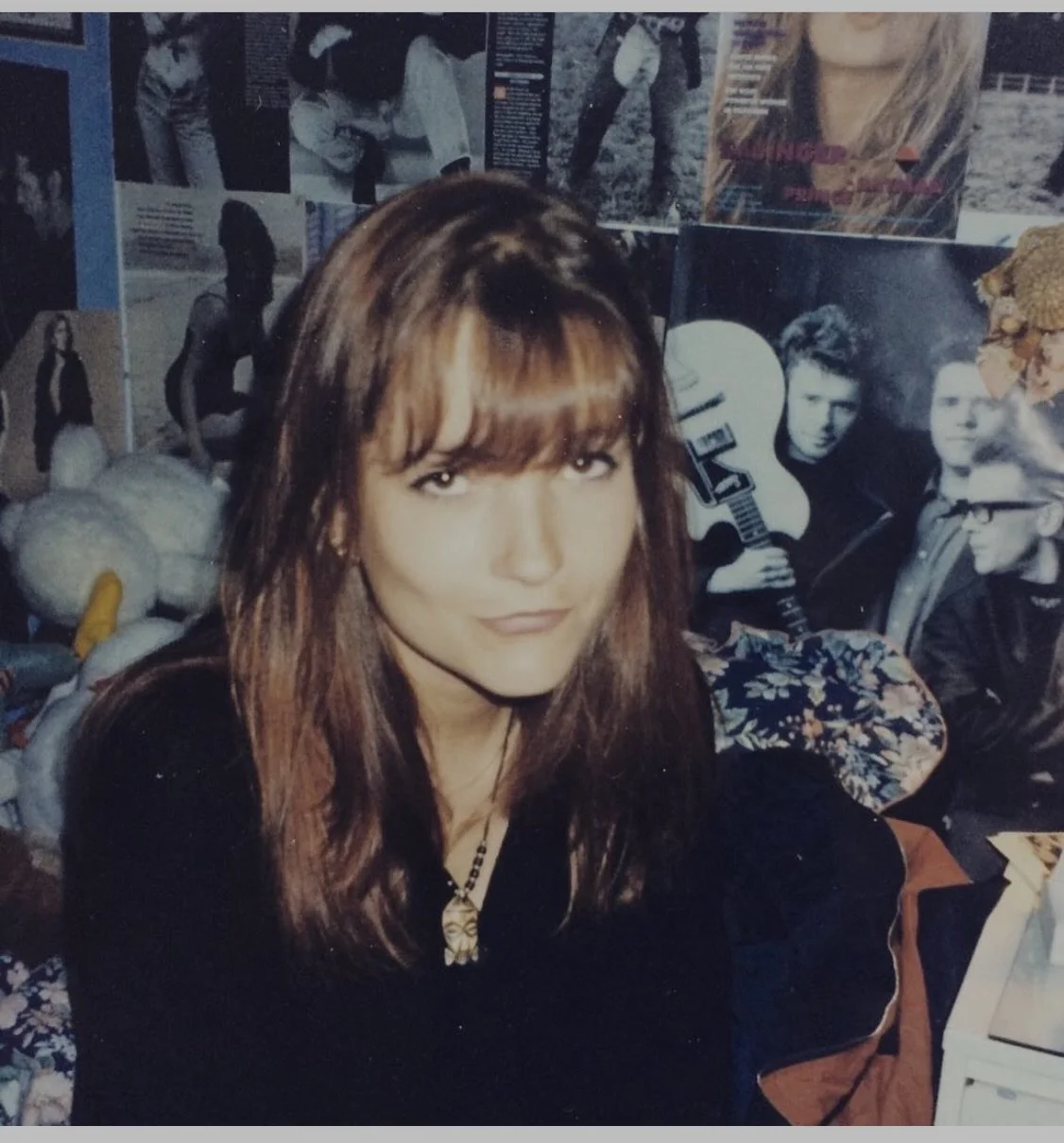
I've always been obsessed with icons. My teenage bedroom walls were covered in posters of musicians, actors, and cultural legends. Like many kids of the ‘80s, I devoured magazines and fanzines, memorised lyrics, interviews, and film credits. I found belonging in the pages of i-D, The Face, Sky, NME, Select, and Empire. An encyclopaedic knowledge of celebrity culture was my early universe. Icons were my cosmology. Long before the internet existed, my best friend called me The Oracle.
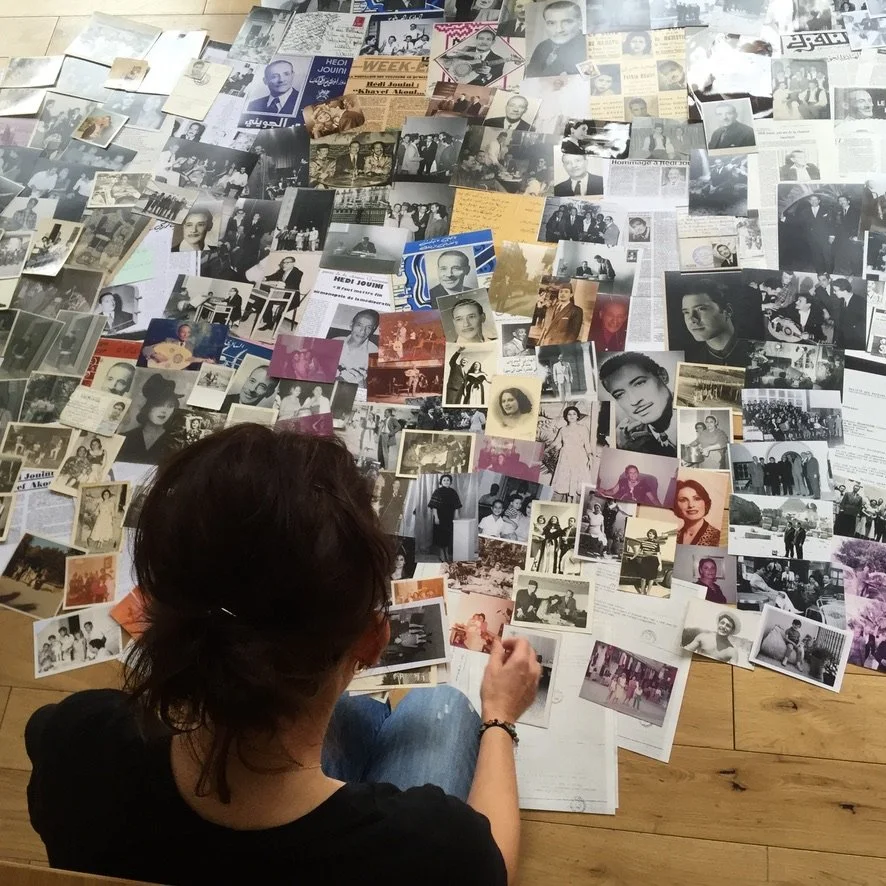
Later, I worked for those magazines, before spending a decade making a feature documentary about my grandfather, a major MENA cultural and musical icon. Through that process I got asked many times about the women in my family, who were essentially caged nightingales. It made me fascinated by how culture decides who becomes an icon. And who doesn't.
During Covid, I wrote and developed a fiction project about a female Arab roboticist building empathetic AI and found myself researching who she would look up to. At the time, an autocratic black robot was roaming the streets of Tunisia while I was discovering the work of multidisciplinary designer Madeline Gannon, the Robot Whisperer. That disparity began to inform everything that became this platform.
What if these women were integrated into popular culture the way rock stars and actors were in the age before Instagram? What if their faces graced not just tech journals and academic papers, but magazines where culturally curious inquiry and news could collide?
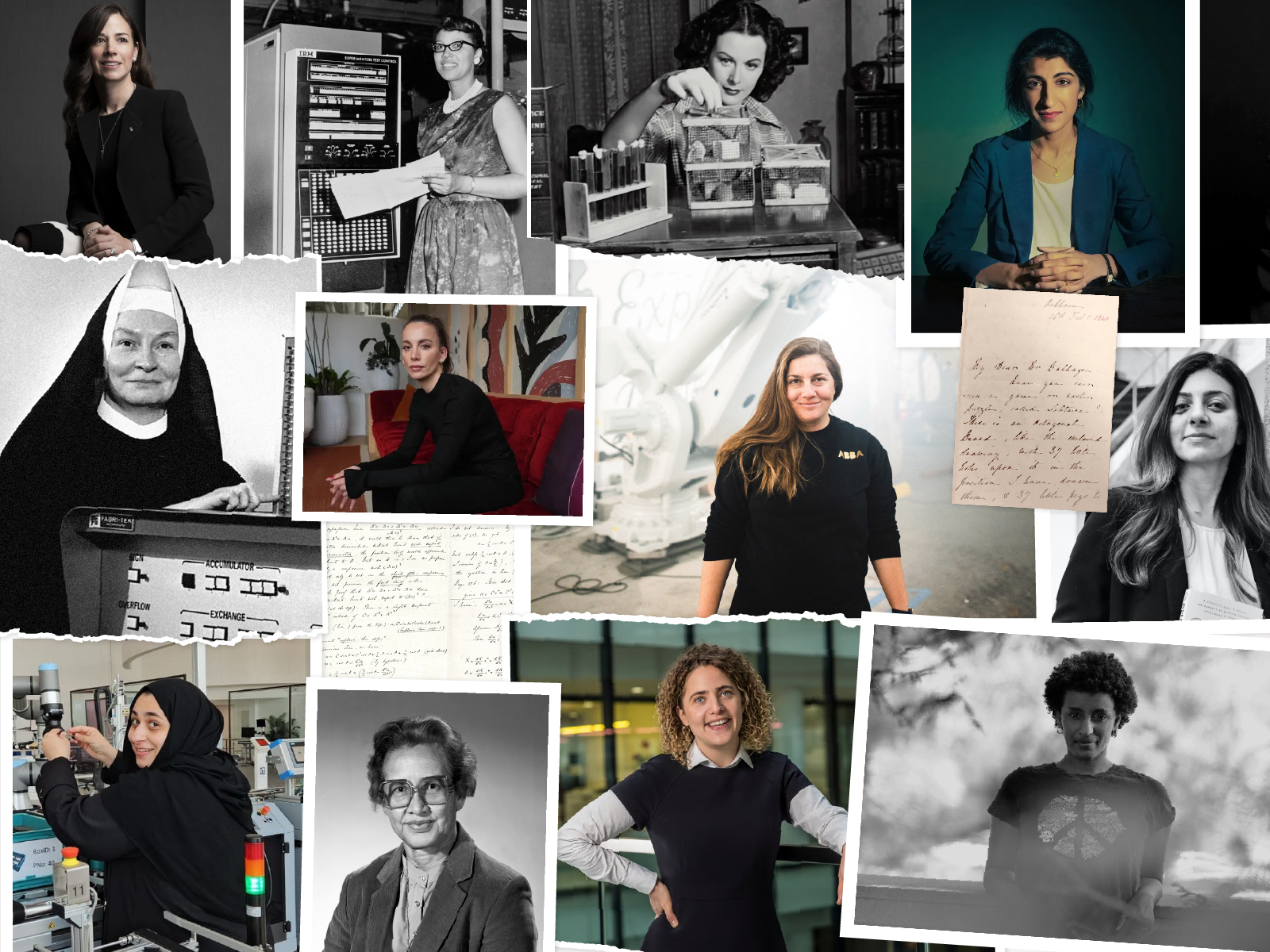
Our team vox-popped 50 people on the streets of London to see if they could name any women in the AI industry - not one could come up with an answer. Yet everyone knows the names of the men. The women shaping how AI thinks, behaves, and decides were harder to name, almost impossible to those who work outside tech, which undermines the relevance of their work and points to an information dissemination problem that felt strangely familiar. Across culture, science and politics, women's contributions have long been present but don’t always make headlines or history books.
Godmothers was born from that gap. A space where we gather women from the past, present, and future, connecting their work, amplifying their visions and addressing the historical imbalances which have always been there but are increasingly urgent to hear.
When women talk about AI, they talk about care, safety, consequences, interdependence and the protection of the vulnerable. Modern technology has been built on narratives of omnipotence, the singular genius wielding power to reshape reality through superior knowledge and control. Almost none of our digital systems were designed with principles of reciprocity, interconnection or cyclical regeneration. The results are clear in the failing of children, adolescents, data workers and other vulnerable minorities, globally unprotected, in the name of profit.
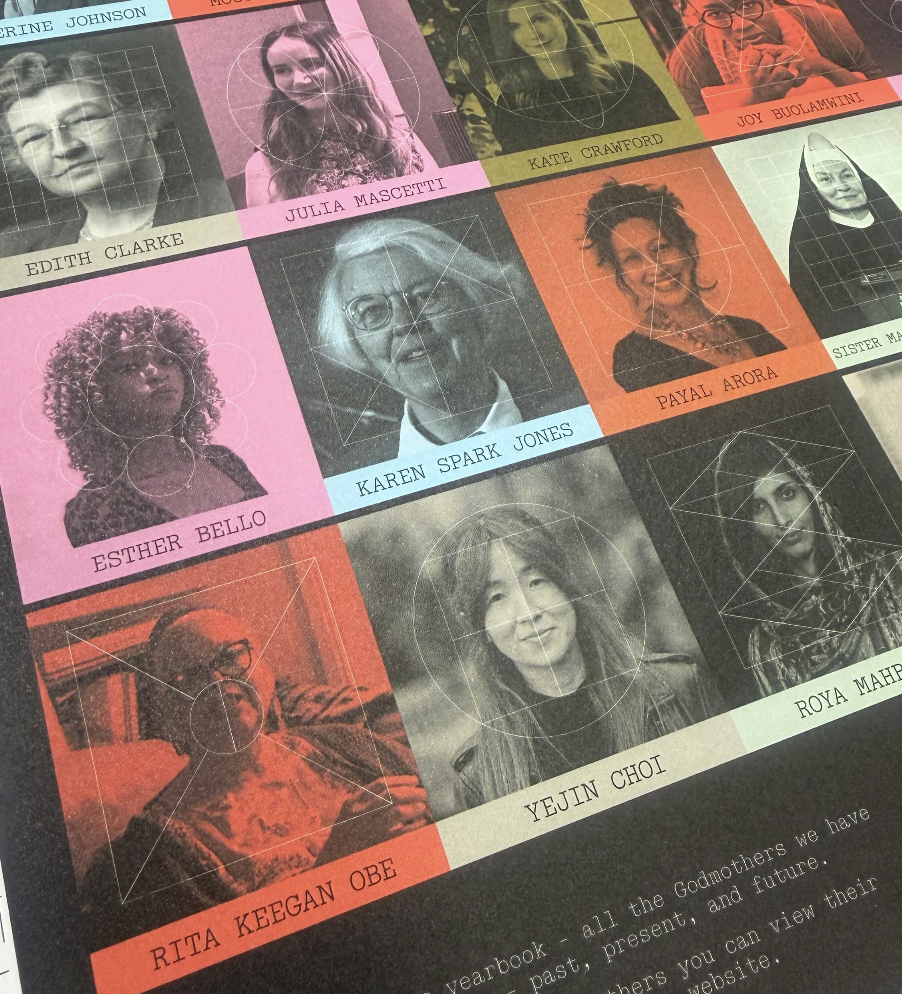
We are in an unprecedented moment. The next five years will set AI's direction and the conversation is dominated by the language of conquest, disruption and domination. The Godmothers speak differently: care, protection, reimagining systems, saying this is not inevitable, we can build differently.
We are here to gather them into one space where you can breathe a sigh of relief and think: the Godmothers have our back. We interview women across multiple disciplines that speak to this moment, from robotics to policy, feminist literature to psychology, filmmakers and artists who reflect and mirror this crucial juncture through their own lenses. I hope you find the same solace I do when reading about them. If new intelligence is rewriting the future of humanity, I am interested in the voices that question, interrogate this new paradigm. I want to know their names. I hope you do too. You might even want to put their photos on your walls.