
Godmothers Asks: Barbora Badurova
researcher and ethicist
PUBLISHED 5 JULY 2026
BY: JAKE INDIANA
How do you counteract digital online life in your everyday routine?
I go to the gym almost every day and especially enjoy strength training, which helps balance abstract mental work with physical activity. I also try to spend a lot of time outside, going for walks in nature or in the city centre, and talking to people offline. I sometimes return to my hobbies like drawing and painting, and I enjoy reading paper books, too. The best antidote, however, is our cats jumping on my laptop.
What’s a favourite or secret AI hack in your personal life?
My favourite AI hacks are not that secret, but mostly about realizing that many frustrations with AI tools can be improved through small adjustments. For example, you can guide the tone of responses in LLMs by asking for a more academic style instead of a friendly tone, which can lead to a different quality of output. However, the most important thing seems to be keeping up to date, as these hacks are evolving at a very fast pace. It is also worth checking and adjusting settings related to data use and privacy. In general, I treat AI as a “good servant but a bad master” – an assistant rather than a creator or source of final answers, and not something to blindly rely on. For me, this also means that the starting and final point should always be our own thinking. It is equally important to choose the right tool for what you need; whether it is a creative task like brainstorming or a more precise task like data analysis, since different AI models still perform better in various areas, and it can spare you a headache or help you decide whether it is even worth doing it with AI.
What AI/tech policy would you like to see implemented in five years’ time that doesn't exist yet?
I would like to see more explainable AI, as well as more programs that increase knowledge of how these systems work, rather than perceiving them as mysterious autonomous super-minds. Education around AI ethics is very important too, not only for users, but also for developers and a broad range of stakeholders, so they are better able to evaluate their motivations and the impact of these systems. I also think that promoting greater diversity and gender balance in AI-related fields is still crucial to ensure that a wider range of perspectives is considered and that AI tools benefit everyone.
Who is your favourite fictional robot and why?
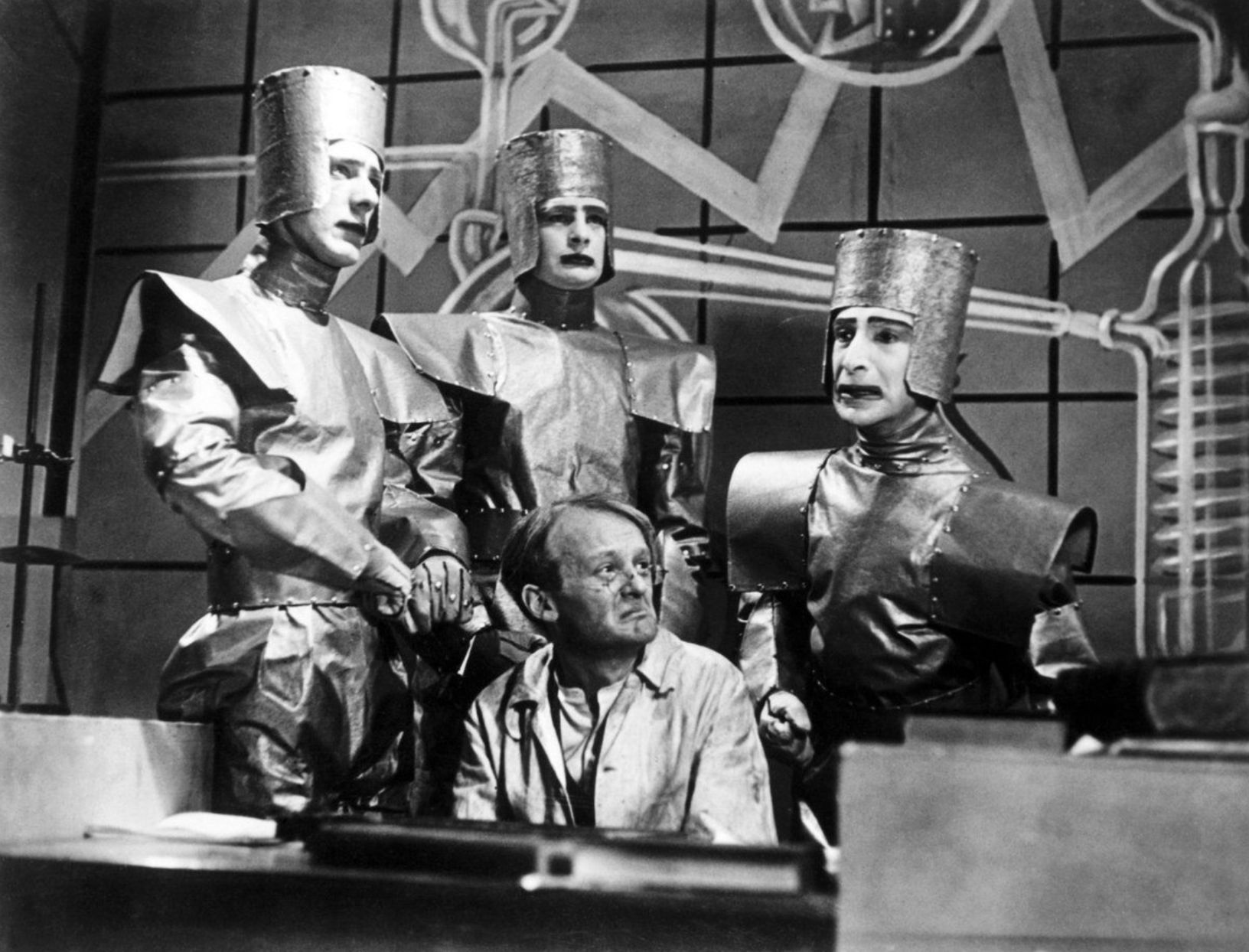
It is difficult to choose one favourite fictional robot, as when I was a kid I loved so many from various TV programmes. When I think of it now, I really like the literary classic R.U.R. by Karel Čapek. The play not only introduced the word “robot,” but also raised important questions about emotions, ethics, and the purpose of creating artificial humanoid robots, while highlighting issues of power, control, instrumentality, purpose, and what ultimately defines us as human.
What is your first memory of using an LLM like ChatGPT or Claude?
It was a very interesting moment for me. I had taken a course in philosophy of AI about 15 years ago during my Erasmus stay, and at that time everything felt very abstract and quite different from the AI widely available nowadays – more about logic systems like LISP and theoretical discussions rather than anything close to today’s AI.
So, when I first used a real LLM, it felt quite fascinating to finally see something that had previously been so theoretical become real and interactive. I remember thinking a lot about the Turing Test and how, in some sense, it now feels much more tangible and “passed” in everyday interactions.
I had also read earlier works by authors like Melanie Mitchell, where AI development is described in a historical and conceptual way, so it was interesting to finally experience those ideas in practice rather than just in theory.