
Godmothers Asks: Evgeniia Kirillova
Lead Energy Market Analyst
PUBLISHED 5 JULY 2026
BY: JAKE INDIANA
How do you counteract digital/online life in your everyday routine?
I think many of us are now living between two selves: the physical self, who moves through the world, and the digital self, who is always present, always reachable, and always expected to respond. The border between them has become so thin that it is sometimes difficult to know where one ends and the other begins.
For me, the simplest answer is still the most effective one: a rather old-fashioned digital detox. I create a dedicated time each day when all notifications are switched off, and the restless digital persona – the one constantly searching for the next message, the next piece of information, the next small urgency – is deliberately put to rest.
What is interesting is that these quiet periods are rarely empty. Quite the opposite: They are often when my best ideas appear. When the external noise disappears, something more original and intuitive has space to emerge. Many personal and professional projects have started for me in precisely those moments. It reminds me that attention is not just a productivity tool; it is also a form of inner freedom.
What’s a favourite or secret AI hack in your personal life?
I am a learning geek by nature. Any terra incognita excites me – a new theory, a new language, a new field of knowledge. I use AI less as a shortcut and more as a kind of intellectual companion: a patient interlocutor that can explain, challenge, reframe and connect ideas.
One of my favourite uses is asking AI to help me explore unfamiliar concepts at different levels of depth. That can range from philosophical questions about consciousness and the nature of the mind to learning languages (I am currently dusting off my Spanish) to very practical reflections such as: “Based on our conversations over the last year, what personal and professional advice would you give me?”
What I find powerful is not that AI gives a final answer. In fact, the best use of it is often the opposite. It helps me formulate better questions. It can turn vague curiosity into a structured path of enquiry. In that sense, AI becomes less of an oracle and more of a mirror: It reflects not only what we know, but also the assumptions, gaps and patterns in how we think.
What AI/tech policy would you like to see implemented in five years’ time that doesn't exist yet?
This is a difficult question, because we are living through what feels like a genuine point of bifurcation. The direction of technology, work, and society may change significantly over the next five years, and many of today’s aspirations may need to be reconsidered as the landscape evolves.
That said, I would like to see a serious, accessible, and public-facing AI literacy infrastructure. Not just another tool for those who are already educated, privileged, or technically confident, but something designed for all layers of society: schoolchildren, older people, migrants, small business owners, people in routine roles, and communities that are often excluded from technological transitions.
AI should not simply make existing processes faster; it should make participation more equal. If designed well, it can reduce certain barriers connected to language, background, education, or access. But that will not happen automatically. We need tools, policies, and educational frameworks that help people understand AI, use it critically, and feel that they have agency rather than being carried along by forces they cannot see.
The speed of life and production cycles has increased dramatically. Many people simply cannot keep up with the constant flow of new tools, models and market developments. My hope is that we build a more inclusive layer of AI education – affordable, clear, and human-centred. That would not only protect people from exclusion; it would also increase the probability of new, unexpected, and remarkable ideas emerging from places we do not usually look.
Who is your favourite fictional robot and why?
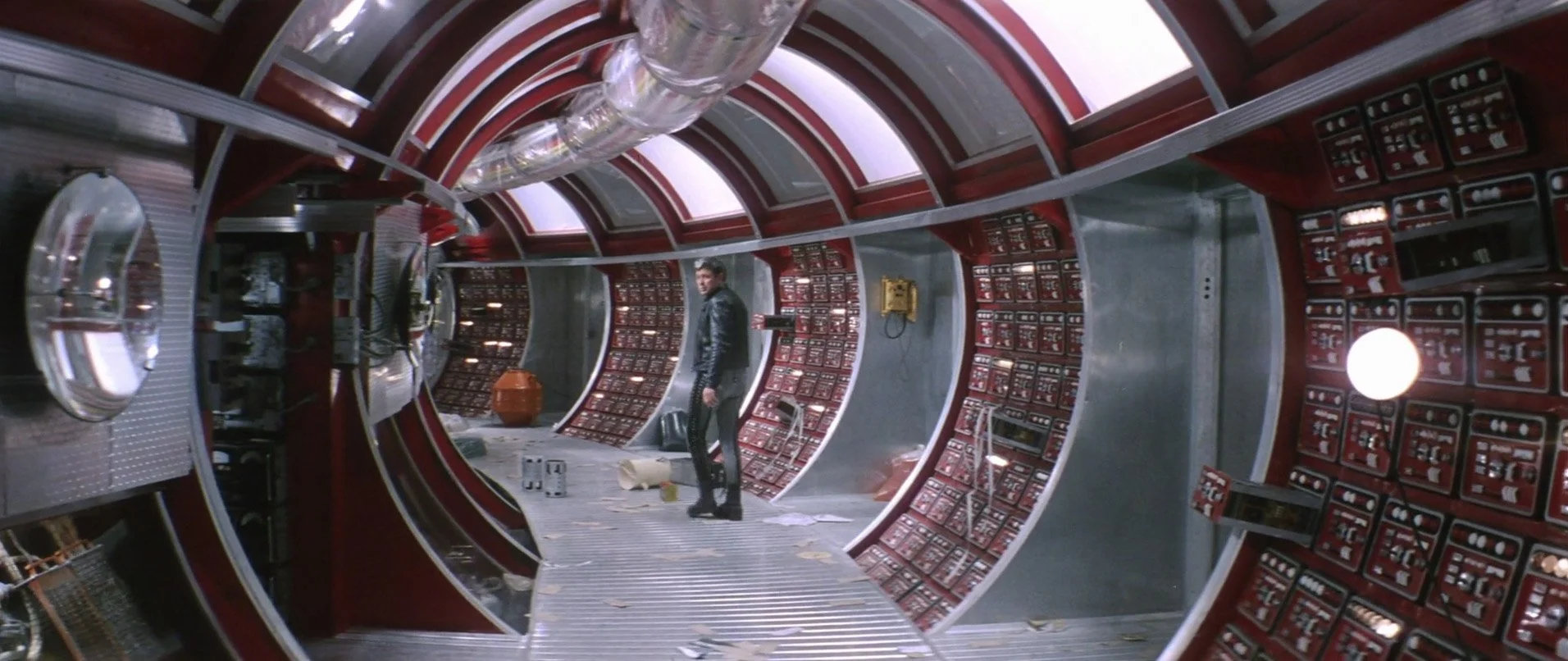
Perhaps it is an unusual answer, but I would choose Hari from Andrei Tarkovsky’s film Solaris, based on the novel by Stanislaw Lem.
I realise she is not a robot in the conventional metallic sense. She is a manifestation, created by the mysterious intelligence of the planet Solaris, and she appears as the exact physical likeness of cosmonaut Kris Kelvin’s late wife. Yet she is also not fully “her.” That gap – between resemblance and reality, memory and presence, love and illusion – is what makes the character so haunting.
For me, Hari represents one of the most profound questions we are beginning to face again through AI: What is enough for us to recognise something as human? Is it coherent speech? Emotional responsiveness? The ability to imitate memory, empathy, or creativity? Or is there something irreducible about conscious experience that cannot be reproduced by even the most sophisticated system?
This speaks very directly to the technological transition we are experiencing now. Some people are excited by it; others feel lonely, disoriented, or even displaced by it. Humanity will adapt, as it always has, but adaptation is not only technical. It is also existential. In order to understand AI, we may first need to understand ourselves more honestly – what we value, what we fear, and what we mean when we say “human.”
What is your first memory of using an LLM like ChatGPT or Claude?
My earliest memory is very practical: as someone whose first language is not English, I asked ChatGPT to help make my written text sound more natural and easier to read. It was a small task on the surface, but I remember feeling that something important had shifted.
Language is never just a technical skill. It shapes how we are perceived, whether we feel confident, and whether we feel that we belong. For people writing in a second or third language, AI can help reduce invisible barriers – the kind that sit between someone’s actual intelligence and the way that intelligence is received by others. In that sense, it can be deeply inclusive.
I also remember using AI to translate and understand poems by Taras Shevchenko. I am half-Ukrainian and grew up with a kind of bilingual inheritance – my grandmother spoke to me only in Ukrainian, while I was raised in Saint Petersburg and formed intellectually in a Russian literary environment. Asking AI to help me approach Shevchenko’s poetry was not just translation in a mechanical sense; it felt like trying to recover another layer of memory and identity.