
Godmothers reads: vANESSA vALLELY
In conversation with Vanessa Vallely about her new book 404: wOMEN nOT FOUND: How Women Can Survive, Thrive and Shape the Future of Tech
ReleaSeD 1 october 2026
BY: dr. vanessa vallely OBE
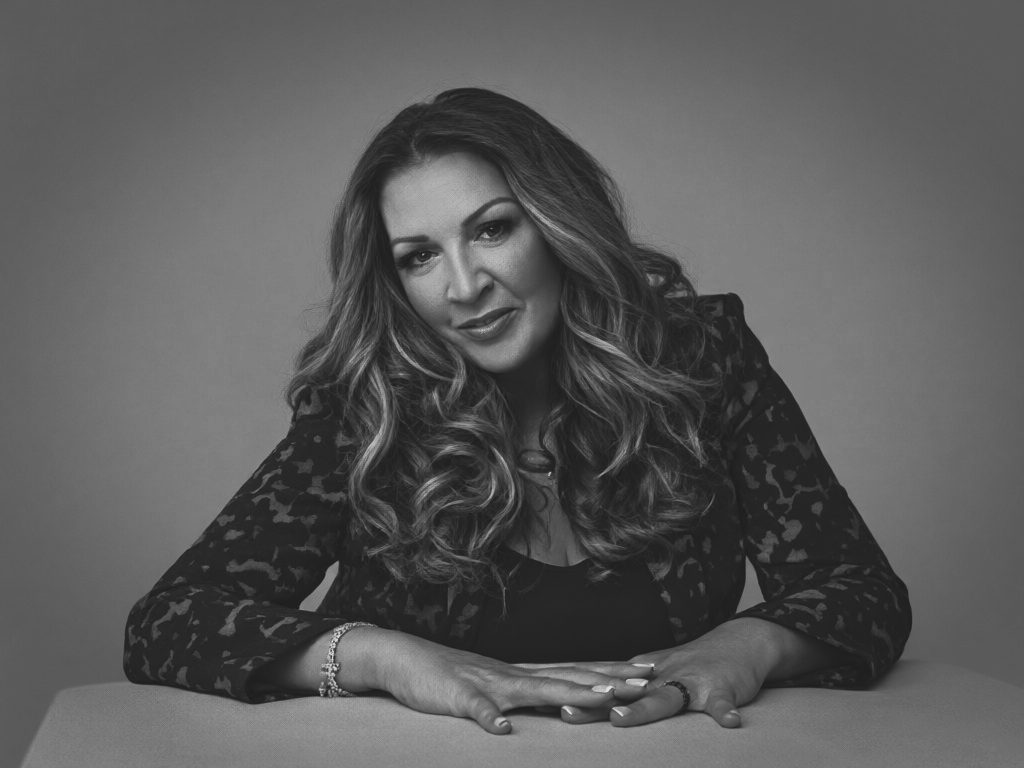
You said that in the early days, there were a lot of incredible men who took you under their wing. Was your first investor one of those men?
He was one of the very first men who took me under his wing, and I write about him in my first book. He was a guy called Roy Dainty. And I came across that role when I’d just had my second baby. I'd lost all my confidence. For some reason, I was all right with the first one, but the second one really knocked my confidence. I was ambitious. I was feeling guilty because I wanted to be a good mum, but I knew that I couldn't necessarily have both at the same time.
I was in a mundane job in insurance, thinking, “I'll sit here and just get myself together before I make that next jump.” And it was pure luck. Picked out a load of papers off the printer as I left and in them was an org chart, and there was a box in the org chart with an unfulfilled role of project management office. And I emailed the guy, researched where this role existed, emailed him and said, “Look, I've just come back from that leave. This isn't necessarily my strong spot, but I've got a lot to give.”
He emailed back and said “Come and have a conversation with me.” And I got on the train and I went to London. I put on a suit that didn't really fit, which made me feel even less confident. And I went and had a chat with him. He opened that door and massively supported me in my career.
What was your experience in terms of receiving support from women in the industry?
I mean, it's hard to talk about women who supported me, because there weren't many women at that level. There weren't many women there. And back in my day, with the few that I came across, we just weren't in that generation of women supporting women. So, it was very different. That change sort of came after the Lord Davies report in 2011. We suddenly saw this huge explosion of women's networks across the UK. We started having networks that we could add to our directory of where women could go for support.
And so eventually, WeAreTechWomen was born as a suite of services and products. We had the clients and sponsorship from the WeAreTheCity side of things. And then one of the “babies” that I've built out from that is OneTechWorld, which has been going on since the pandemic. It’s a global virtual conference that's free for women. Thousands of women attend from all over the world. There are four stages of content, but bringing people together is the force of it. Educating, connecting, and pushing women to be all they can be in their respective professions.
And then, more generally, there are other things that we do, like leadership programs for companies for their mid-level women, helping them understand that there needs to be a job board overseeing this, as well to try and get more women into tech. So it's a very friendly space, the women in tech space. You've got a few media companies in there, but generally if it's homegrown, we all kind of help and support each other. Which is that sisterhood, right? That's how it should be.
Reflecting on your career, what would you say was the turning point?
A bit later on, once I got my kids settled, I went back into investment banking. There are some really hard jobs there. I’ve done a lot of technology transformations, been part of quite a few teams. They're not necessarily seeing the best in people, because when you merge companies together, there’s politics, protection of budgets, stuff like that. So a real good leadership eye-opener is watching how people operate in those environments. And then I worked my way up to one of the CEOs over at Barclays for technology transformation.
But eventually, I just kept thinking, “Where are the women? Why are there no women around my table? Why am I the only one here? And how do I get the women that work for me and the women that I work with into this room?”
Because I kind of got there by hard work — I'm not going to detract from that — but it was also a little bit of putting my hand up for things that I really couldn't do. I managed to wing it by taking a few risks in my career, and by working alongside some absolutely incredible men who gave me a lot of opportunities to push forward and try new things, but who were also there to catch me when I fell and dust me off to go back again and keep trying.
I kept having this notion of “There must be women that are feeling like me.” And as a woman in a senior role, it's quite lonely in that environment. I was an only child, as well. I was just… longing for some sisterhood in that space. So I was moaning to my husband, saying, “Why isn't there a website for me?” And he's a very practical man and a technologist, so he's like, “Let's build it. And whatever you find on your journey—women's networks, events and stuff like that—we're putting it on this website.”
And how did it grow from there?
It became a matter of “Okay, that's great. Let's get more senior women involved.” But what about the women in the middle? What about the women who don't earn the money to get the support that they need? What about the women who are sitting behind people who are waiting for their pension in these really antiquated, hierarchical job families, so they can't get that support—where there's only one promotion and everyone's in the same queue? How do we support them? How do we not lose them from the workforce? How do we inspire them?
And then came this idea around storytelling, the power of storytelling. So that's kind of where we are now. When WeAreTheCity began, it was a side hustle. It was something off the side of my desk, but it was something that, over time, I really fell in love with. And every time I found myself doing things with women, I felt that fire in my belly — that light in my heart, if you like — that this is where I was supposed to be. But it was a big dilemma. I always wanted to be this top city woman, this corporate girl, ever since I was 16 and I could see the city from my bedroom window. And then, when I was finally within touching distance of those really senior roles, I didn't want it anymore.
So I made a decision to leave. And it was just before I was 40. I think I’d just made the 40 before 40 from Financial News and they kicked me off at 41, which is rude. But I got to that particular point where I was like, “Right, I'm going to start again. I'm going to throw myself into this world of supporting women without a business plan, without any idea where money's coming from.”
Can you elaborate on that decision?
I think I knew a couple of years before. I remember sitting in a room, just looking around the table, thinking, “I don't want to be here anymore.” I’d come back from some volunteering trip as well, and some guy was at my desk, and he was shouting at me about reports that the group needed. I looked at him and thought, “In the grand scheme of the world, are your reports really that important?” And I think that I knew then that I was checked out.
I remember getting my PA looking, surely thinking, “Oh my God, she's gonna have a meltdown.” Because I looked at this guy in disbelief, like, “I really don't care about your reports.” So I kind of got out before they fired me. I remember sitting in my conservatory: It was me, the stapler, and a computer, thinking, “Where do I even begin?” I wrote a business plan of how I would help companies to attract, retain and develop female talent.
I sent it off to a couple of people. I sent it to one of my old bosses and he turned around and said, “I'll give you the money. Don't send this anywhere else. I'll give you what you need.” I mean, in hindsight, I needed 10 times more than what I asked for, but I'm ever grateful for that step. It enabled me to get an office. I hired a load of people that I didn't need just so the aesthetics of running the company looked as it should. And through that, you learn a lot of lessons, right? Bit by bit, I built product by product. I managed to land sponsor by sponsor. And it wasn't easy. It took me years. But then you build up a reputation because you deliver well, and then they come back.
You’re based here in London, but was your network global before the digital revolution or, or were you very much only UK-focused?
It was London-focused, but it became global during the pandemic. That's when we really picked up a global audience, because we shifted so much online. So when we had the awards, for example, where we would have a ticketed event and a hotel and the award winners would turn up and they might be able to bring a couple of family members during lockdown, we opened up that link. We had parents in the Congo, parents in Peru, parents everywhere joining on their technology and celebrating their daughters or their nieces. We had people with babies and their cats and their dogs and it was just this big coming together to celebrate women. I absolutely love that, because it was accessible. No one had to pay. It was a beautiful celebration of women.
Now, I would still say we're a good 70 percent UK and 30 percent global in terms of our reach. We’re a network of a hundred different companies in one way or another now. But don't get me wrong, there's been times where we've been down to a pound in the bank and I'm like, “I don't know how I sustain this.” Like with the death of DNI, or when the prime minister at the time put out his orders and literally the companies just disappeared; their budgets disappeared. Their hands were tied and we had no money coming in.
If it wasn't for a few companies that just refused to go the way everyone else was going, we would not have made it. I look back and I see that now. But there seems to be a bit of a turning of the tide, with companies coming back and working out maybe how they could navigate that landscape.
What made you want to put all that information into a book? I suppose it's all your accumulated knowledge, but it's like a guidebook for young women who want to get into tech.
The Lovelace Report is for companies. It acts as a set of recommendations. It gives you the business case. We lose between 40-60 thousand women every single year from the tech sector. That's 100 women a day. The reason they leave is progression — it's recognising that this is paid inequality. We know that men are entering the sector at a faster rate than women, and women are leading at a faster rate than men. We know that not enough girls take STEM subjects in school, so we're not even growing a pipeline, right? So that report was for companies to say, “Who's getting the work here? Who's getting the big transformational projects that are going to elevate their network, that are going to give them a big ticket item to talk about how you are distributing work fairly? Who's been stuck there for three years without any opportunity?” It was just these really simple things.
So that was for the companies, but the book is for the women. Because these companies… it's going to take them a few years to get their act together. While they're getting their act together, I want women to be ready with the most home-sharpened toolkit they can possibly have. The book sets the context of the industry through the Lovelace Report, written with my co-authors, Karen Blake MBE and Deborah O' Neill from Oliver Wyman. It talks about that context, because it's really important they understand the environment they're working in, because that's not what needs fixing. The women, we don't need fixing. It's the system that is broken, like it is with so many gender-related things.
What do you think needs to shift culturally to fix things?
I mean, even some of the things that were written in that report, some of the stories that were told there, it acts as a recognition piece — and I think proximity bias plays a massive big part in this. I saw it in my own workplace. You know, the big ticket IT projects would go to the guy's mates that he'd worked with before, rather than anyone else getting a new opportunity. And if you don't have a network where you're in the right room to say, “Hold on a minute, I can do that,” or “I'm not even aware that the opportunity just went on as a discussion down at the pub,” then you don't get that opportunity.
The biggest thing from a cultural perspective is fairness. Who has access to those opportunities? Are they promoted in channels that are not necessarily rooms full of men? That is the change we need, this understanding of that as we move forward. This is also such an important conversation with AI, that those leaders look around the room and go: Who's in the room? Who's contributing to what we're building? Whether it's a product, a process, a service, a platform. Do we have the right people in the room whereby a woman is going to say, “Do you know what? That doesn't work for me.”
And you think of how many instances we've had of that. Apple Watch is not tracking periods; facial recognition is not recognizing diverse faces and people from diverse backgrounds. There are so many stories about that lack of fairness. So there has to be the common sense to go “If we're going to build something for society, the representation from society needs to be in the room.”