
The Woman Who Taught Machines How Cloth Moves
In conversation with Ava Oppenheimer, the physics-informed AI researcher who could revolutionise sustainable models for AI.
PUBLISHED 5 JULY 2026
BY: GODMOTHERS

Ava Oppenheimer is a South London based, British physics-informed AI researcher and Founder of TryIto - an emerging B2B technology company specializing in artificial intelligence and physics-based simulation. The company uses a novel approach to make computer simulations stable and computationally efficient at scale, specifically focusing on virtual try-on technologies to reduce e-commerce return rates.
Be sure to check alternate versions of this story via our podcast and print zine.
Ava Oppenheimer grew up being told she’d never sit the higher maths exam. Fast-forward a few years and she’s the founder of a 4D machine learning and AI research company. TryIto builds strong mathematical and physics simulations to help companies of all industries avoid breakdowns and overuse, and it’s run entirely from her flat in South London. She is young, she is brilliant, and she is solving a problem the industry didn’t even know it had – managed with the quiet certainty of someone who has always known the universe is bigger than the curriculum.
What’s it like having such a loaded surname?
It never came up until the film happened – then suddenly everyone asked, and I wish I had a cooler answer. My grandparents are Jewish immigrants from Germany, so I don’t know much about whether we’re related, but I’d like to think there’s some maths power running through my veins. Hopefully in a way that has a positive impact on the world – rather than the other kind.
You came to deep tech via fashion styling. How does one lead to the other?
When I was at university doing aerospace engineering I needed a break, so I went into fashion styling – music videos mostly. Incredibly fast-paced, but the sustainability side really irked me. Then at Synthesia we were doing 3D and 4D scanning of human bodies, and one of the biggest problems was: How do we make more data with less input? I started exploring how you change clothing in post-production. That’s when I realised the bridge between the human body and the digital world is massive.
Virtual try-on – where you try on a garment without putting it on your body – doesn’t really exist yet. People are testing it, but there’s such a lack of understanding of real-world processes. Aviation accounts for 2% of global carbon emissions. Fashion accounts for 10%. That discrepancy exists because we don’t know the size of what we're buying, the material, what it’ll look like. We’re producing and throwing away at a scale that should horrify us. That anger became the business drive.

What is TryIto actually building?
We started as a fit accuracy company in 2024. I figured out quite quickly that fashion companies don’t actually want this technology — if there’s anything that takes a customer away from the initial shopping experience, that’s bad for them. They want the fast-paced buy-now. Which was really disappointing.
But the technology we were building had capabilities that went so far beyond cloth to human body. In gaming and VFX, simulating assets is incredibly labour-intensive and energy-intensive. Computers don’t have a calculation step to tell a rendering engine what’s going on in the physical world. So when you give a computer too much physics to deal with, it can’t cope — and you get what we call an explosion: everything literally blows up, your piece of cloth turns into a massive rasterised mess of triangles.
What TryIto does is essentially tell the computer “Chill out. You don't need to calculate anything. Here’s all the maths and physics you need to know – go and do what you're good at.” We’re building the mathematical foundation that AI forgot. More stable physics means fewer iterations, less energy, less water, less wasted time. That’s the sustainability piece.
How do you feel as a young female founder looking ahead with the notion that “AI is just a baby?”
The fact that this current “AI boom” is still relatively early has definitely opened doors for younger founders and researchers to build things that may not have been possible even a few years ago. It’s an incredibly exciting time to be working in this space, especially knowing we’re still at the beginning of something much larger.
At the same time, I think it’s important to remember that AI itself is not new. A lot of the foundational research, mathematics, and theory behind what we’re seeing today has been built by people who have spent decades in the field. The tools may have changed rapidly, but the scientific groundwork didn’t appear overnight.
As a young founder, that’s actually something I find motivating rather than intimidating. I think we’re at a time where the lack of understanding around AI is actually an incredible upside. As humans, when we’re faced with something we don’t fully understand, we don’t stop asking questions – we’re inherently curious!
I think those questions, combined with experts in very particular areas of STEM, open up completely new approaches to innovation.
I supposed that is how babies grow in a sense –- learning from others around them!
That’s very much what I’m doing with TryIto, and how the team has naturally formed around it.

How hard has it been to fund TryIto?
I'm a year and a half in and still fully bootstrapped. Between 2 and 3% of women internationally get VC funding — and that includes mixed-gender teams, which is where the majority of female-accessible funding actually sits. There are less women in STEM trying to build businesses, yes. But I do still think there's a subconscious misogyny at play.
If you won the next funding round of £10 million for your start-up, how would you invest it?
I genuinely believe that the way I can make meaningful impact is by building technology powerful enough to influence the direction AI develops in.
We’d invest heavily into research, simulation infrastructure and compute metrics – specifically around building stable, physics-grounded systems that are far more computationally efficient and stable at scale.
A huge bottleneck in AI right now is that systems can generate or predict things, but they don’t reliably understand the physical world. Current simulation systems are often too unstable and too computationally inefficient for the scale AI will eventually require.
The goal with TryIto is to build stronger mathematical and simulation foundations that can support industries far beyond robotics, embodied AI, manufacturing, engineering, digital environments, even scientific research. Technology that interacts with reality more accurately and sustainably.
What has been your own self guiding tech “motto?”
If you can think it, you can build it. And don’t just talk about building it, actually do it!
Tell us something we wouldn’t expect about a female tech entrepreneur!
I grew up around incredibly capable women, so I never really questioned whether women belonged in technical spaces. What surprised me most has actually been how difficult it still is in 2026 to be a female founder in tech.
Interestingly, I’ve found STEM and research communities to be incredibly supportive. The difficulty often comes more from adjacent spaces, where women can still be underestimated or overlooked, especially by people who aren’t technical themselves.
I think I was most surprised by the fact this is still such a genuine issue today.
What do you think is the most invisible aspect of the AI revolution?
As boring as this may sound, I actually think one of the most invisible aspects around AI is the backend and development side. We talk endlessly about what AI can do, but much less about how it’s actually built, who is building it, and what assumptions are embedded into those systems.That disconnect creates a huge amount of confusion. AI is simultaneously overhyped and misunderstood, often by the loudest voices discussing it. I don’t think that opacity is always deliberate, but it has made AI feel strangely inaccessible to the public despite being everywhere.
Have you had to sacrifice anything to set up your own company?
This is a difficult question to answer because, honestly, probably everything to some extent. Building a company requires you to go all in. It’s not really a job you clock in and out of, it becomes intertwined with how you think and live.It never really felt optional for me. Perhaps because I’m so attached to the research and the bigger vision behind it, I know I have to see it through. I genuinely believe the only way to make meaningful impact at scale is to build something successful enough to survive and influence the industries around it.Any founder will tell you they’ve sacrificed a lot; time, stability, relationships, certainty. But strangely, when you care deeply enough about something, it stops feeling entirely like sacrifice. It feels more like stepping into the thing you were meant to do.I think we have to make sacrifices to open new doors.
How can we look at AI through a philosophical or spiritual lens?
The only way to really talk about AI at the moment is through a philosophical lens. Personally, I don’t tend to believe we’re limited by technology itself, but rather by who is making decisions around that technology and the economic systems influencing those decisions.These conversations can quickly become political and often drift away from the technology itself, which I find really interesting. I think one of the most overlooked aspects of AI is not just the technology, but how conversations around it begin, where they lead, and what they reveal about us as people.
Do you think the Godmothers can be modern day witches?
There was a time in history where women were labelled as witches and punished simply for being intelligent, outspoken, unconventional, or incredibly capable. Honestly, I know so many women today who would absolutely shake the boots off of a man from the Middle Ages!
What is your “AI Utopia” – let’s say 10 years down the line?
This feels like an impossible question to answer – again, perhaps because this isn’t a technological question and politics remains so uncertain.I’d like to think that 10 years from now, we coexist peacefully with technology, using AI as a tool rather than a replacement for people. To better the planet, improve education and scientific understanding, and deepen how we connect with one another. If AI does lead us to engage more with physical skills (skilled manual labour, for example), there’s a utopia where we go back to community style living, kindness, and art.
What do you like to do for fun?
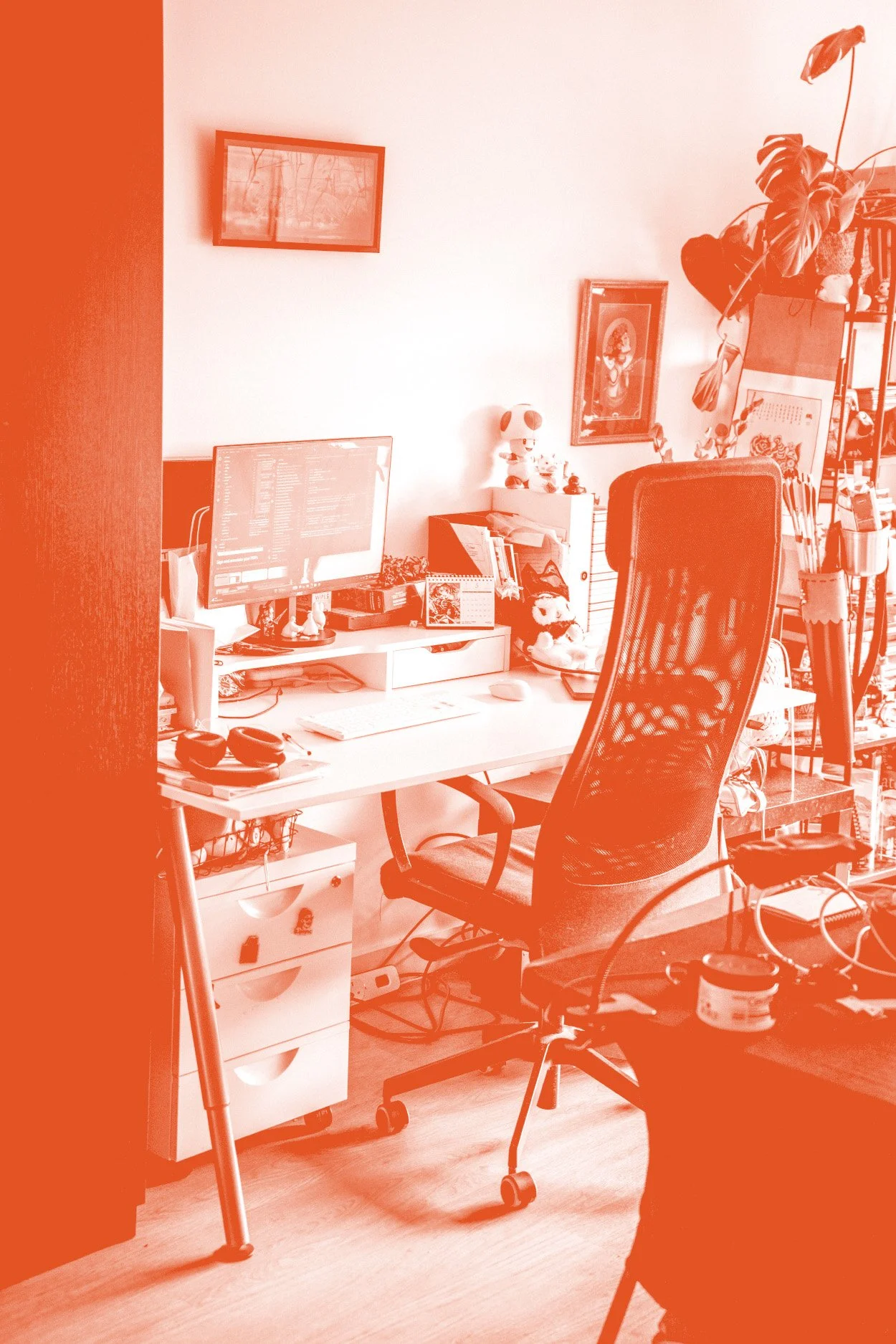
I call them side quests. Longbow archery — one of England's only heritage sports, and my community has an average age of well over 50, which I love. Magic: The Gathering. Hapkido, which is a Korean martial art. It's important to remember we still have bodies. Sometimes I forget that myself — I'll just sit at my desk for 14 hours. But learning how your body moves, grounding yourself. Embodiment. That's what we have that AI doesn’t.
Where can people find out more about your company and how to find you?
I'm always down to nerd out and chat about TryIto, you can find me (https://www.linkedin.com/in/avaoppenheimer/) and TryIto (tryito.io) or TryIto on LinkedIn - stay tuned for updates!
Dungeons and Dragons or Magic the Gathering?
MTG! I honestly love the strategy and rules. The card artwork is always incredible and I am a sucker for the tangible asset.